Solar panels get most of the attention, but the inverter is what makes their electricity useful at home. Understanding this one device makes it much easier to choose a solar system that matches your electricity needs, your roof and your expectations for backup.
What does a solar inverter actually do?
Solar panels produce direct current, or DC. Most household appliances use alternating current, or AC. A solar inverter converts the electricity generated by your panels into the form your home can use.
Its job goes beyond conversion. Depending on the model, it also tracks the solar array’s operating point, monitors generation and manages electrical protections. Think of panels as the source of energy and the inverter as the device that makes that energy work with your home.
Grid tie: a straightforward route to daytime savings
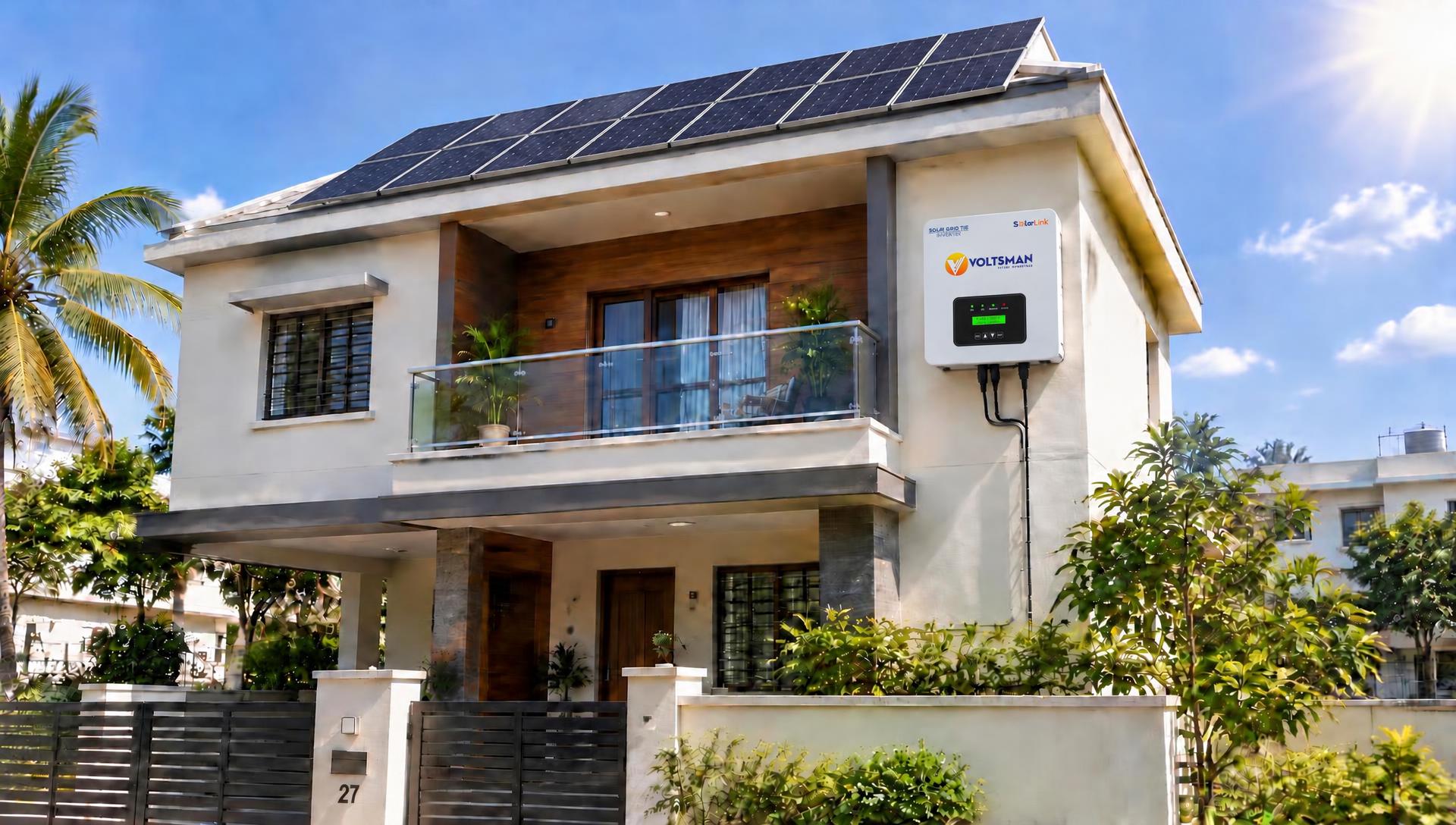
A grid tie inverter works alongside your utility supply. Solar generation can serve your home’s demand during the day, while the grid supplies any shortfall. Where your electricity provider permits it, surplus generation can be exported under the applicable metering arrangement.
Voltsman’s SolarLink single-phase Grid Tie range spans 2 kW – 6 kW. This gives homeowners a choice of inverter sizes for residential rooftop installations. The final selection should account for the panel array, sanctioned load, supply phase and local utility requirements—not roof area alone.
One important distinction: a standard grid tie system is not a power-cut backup system. It normally shuts down when the grid fails to prevent unsafe energisation of the network. A lower daytime electricity bill and power during an outage are different goals.
Hybrid: solar, battery and grid working together
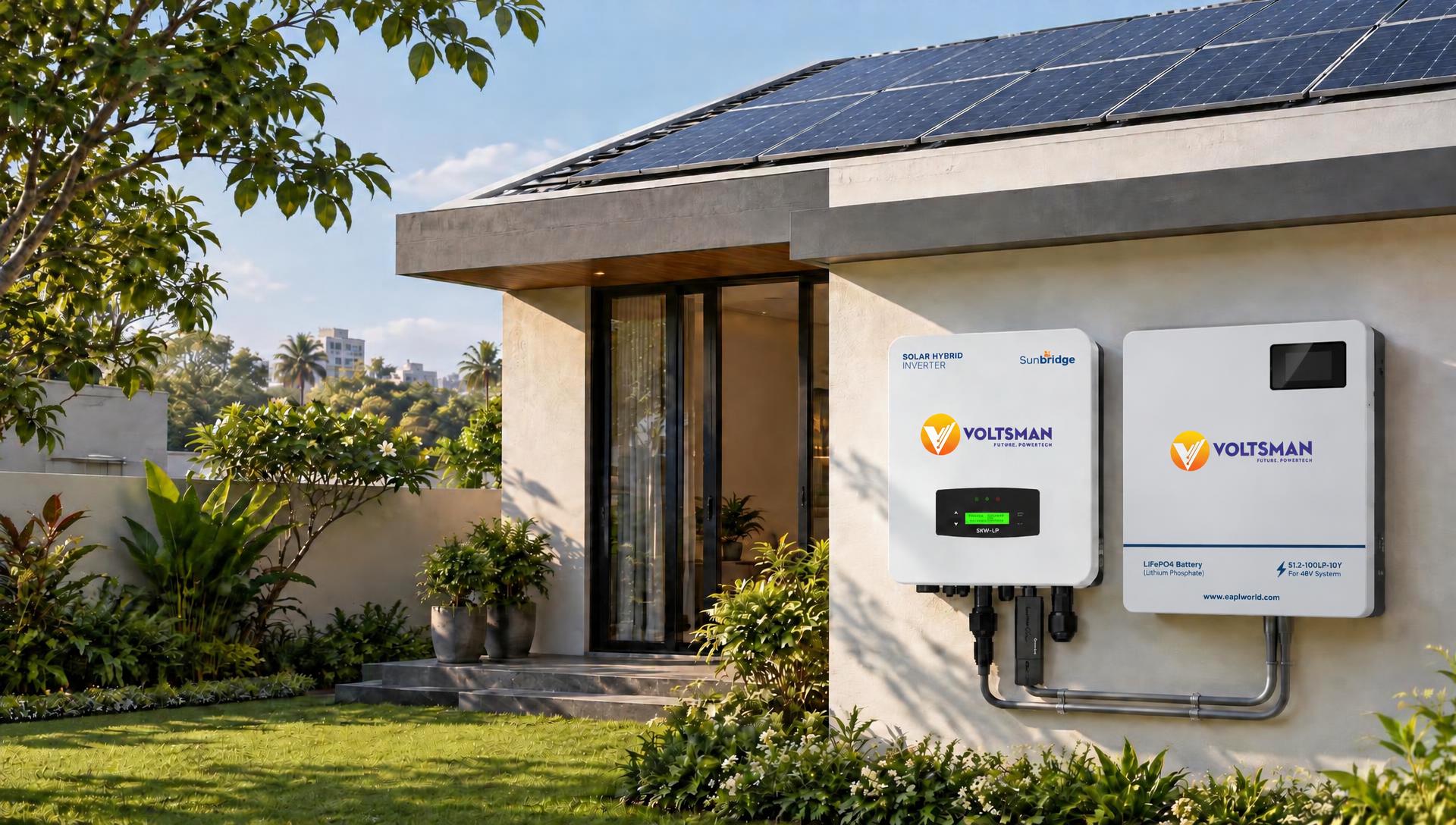
A hybrid inverter coordinates solar generation with a compatible battery and the grid. It can store energy for later use and, where the system is designed for it, supply selected backup loads when utility power is unavailable.
Voltsman’s hybrid range includes single-phase low-voltage, three-phase low-voltage and three-phase high-voltage options. These are different system architectures, not interchangeable upgrades. Your installer should match the inverter to the electricity connection, compatible battery voltage and the loads you want to support.
Backup capacity is finite. The number of appliances you can run and how long they run depend on inverter output, usable battery energy, battery state of charge and actual demand. Air conditioners, pumps and other high-starting-current equipment need particular attention.
Where does a lithium battery fit in?
A battery stores energy; it does not generate it. In a correctly designed hybrid system, stored solar energy can be used after sunset or for supported backup loads. Voltsman offers LiFePO4 solar batteries in wall-mount and rack-type formats.
Compatibility matters more than appearance. Check battery voltage, supported communication, permissible charge and discharge rates, usable capacity and installation conditions against the chosen inverter’s documentation. Adding a battery to an existing grid tie installation may require additional equipment or a different system design.
Five questions to ask before you choose
Start with your electricity bills: how much energy do you use, and how much is consumed during daylight hours? Next, decide whether the priority is bill reduction, outage backup or both. A clear objective prevents buying storage you do not need—or expecting backup from a system that cannot provide it.
- Is your supply single-phase or three-phase, and what is the sanctioned load?
- How much unshaded roof space is available throughout the year?
- Which appliances need backup, and what are their starting and running loads?
- Are the inverter, panels and any battery electrically compatible?
- What metering approvals, protections, installation checks and after-sales support are included?
Choose a system, not just a product
A dependable installation combines suitable equipment with good engineering: correct cable sizing, earthing, surge protection, safe isolation, appropriate mounting and utility approval where required. Ask for a documented design and commissioning handover.
Voltsman’s Grid Tie, Hybrid and Lithium Battery ranges provide starting points for different household needs. Explore the options, then have a qualified solar professional assess your site. The right system is the one designed around how your home actually uses power.
System performance, savings and backup duration depend on site conditions, equipment selection, installation and usage. Always follow the selected model’s documentation.